You’ve booked your Camino trip and want to learn some Spanish before you go. There are some ‘language essentials’ that are always needed when you travel so you can connect with locals and feel more confident and independent.
Although your pronunciation or your accent might not be ‘on point’, if you have the terminology, you are halfway to making your trip an easier one to navigate! Here are the basic phrases every pilgrim should know:

“Buen Camino”
One phrase you’ll hear often along the Camino de Santiago is “Buen Camino.” It’s the traditional greeting among pilgrims walking the route, meaning “Good Camino” or “Have a good journey.”
This simple expression reflects the spirit of encouragement and camaraderie shared by those taking this pilgrimage. Use “Buen Camino” to greet fellow travellers, wish them well as they pass, or acknowledge their efforts during the journey.
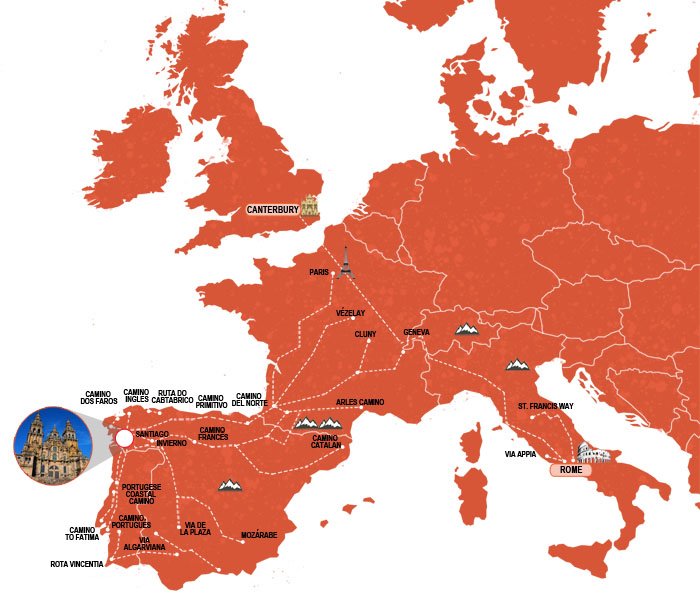
Whether walking the Camino Francés (yes, even in the French way) or heading toward the cathedral in Santiago de Compostela, this useful phrase is a wonderful way to connect with others.
Common Greetings for Your Camino Journey
Learning basic Spanish greetings is essential for connecting with the people you meet along the Camino de Santiago.
Even simple phrases go a long way in creating positive interactions during your Camino walk.
- Por Favor – Please
- Gracias – Thank You
- Hola – Hi
- Buenos días – Good morning
- Buenas tardes – Good afternoon
- Buenas noches – Good night
- Hasta luego – See you later
- Me llamo – My name is
- Muy bien – I’m fine
- Adios – Goodbye

Directions
When walking the Camino de Santiago, asking for directions is a must. These will help you locate important spots, making your journey smoother.
- Dónde está el ….. más cercano? – Where is the nearest…?
- Farmacia – Pharmacy
- Parada de autobús – Bus stop
- Banco – Bank
- ¿Dónde está el baño? – Where is the bathroom?
- ¿A dónde vas? – Where are you going?
- a la izquierda – On the left
- a la derecha – On the right
- ¿Dónde está el albergue? – Where is the hostel?
- ¿Dónde está el Camino? – Where is the Camino?

General Phrases and Questions
Knowing some basic questions in Spanish will help you along pilgrimage routes. Whether you’re looking for directions, asking about prices, or inquiring about food, these phrases in Spanish will make your journey smoother and your interactions with locals more enjoyable.
- Cuándo? – When?
- Qué? – What?
- Por qué? – Why?
- Cuánto cuesta? – How much is it?
- A qué hora? – What time is?
- Hay pan? – Do you sell bread?
- Habla inglés? – Do you speak English?
- ¿De donde eres? – Where are you from?
- Solo hablo un poco de español – I only speak a little Spanish
- Necesito un medico – I need a doctor

Times and Dates
Knowing how to ask about the time or mention the day will keep you in sync with fellow pilgrims and locals along the Camino routes.
Familiarity with these basics ensures you stay on track, whether you’re in Galicia, passing through villages, or heading towards Santiago de Compostela.
- La mañana – Morning
- La tarde – Afternoon
- Ayer – Yesterday
- Hoy -Today
- Mañana – Tomorrow
- ¿Qué hora es? – What time is it?
- Pasado mañana – Day after tomorrow
- Lunes – Monday
- Viernes – Friday
- Seis menos cuarto – Quarter to six

Meals and Drinks
When walking the Camino de Santiago, you’ll encounter plenty of opportunities to enjoy local meals. Here are some common words and phrases when ordering food:
- Cena – Dinner
- Desayuno – Breakfast
- Almuerzo – Lunch
- Quiero/Quisiera – I want / I would like…
- ¿Cuál es el plato del día? – What’s today’s menu?
- Postres – Dessert
- Carne – Meat
- Bebida – Drink
- Cerveza – Beer

What are the Best Ways to Learn a New Language for Your Camino Journey?
Learning a new language like Spanish can make your Camino experience even more rewarding. You don’t need to be fluent, but learning some key phrases can help you build your vocabulary and confidence.
1. Language Apps
Download apps like Duolingo, Google Translate, and Babbel for convenient lessons and translations that fit into your daily routine. These platforms also break down lessons into bite-sized chunks, making it easier to learn new words and phrases.
2. Online Courses
Online courses can also provide structured lessons, giving you more in-depth knowledge. Some platforms provide interaction with instructors or tutors, helping you improve faster.
You can also move through lessons at your own pace, revisiting topics as needed to strengthen your skills.
3. Practice with a Native Speaker
Join conversation groups or find a Spanish speaker. Speaking with a native will help you get used to everyday language and improve your confidence.
Engaging in conversation allows you to correct mistakes and reinforce proper usage in real time.. Don’t worry, you’ll have plenty of time to practice with locals once you set out on the Camino!
Speak the Language, Walk the Camino
Equipped with these essential phrases, you’ll not only navigate the Camino with ease but also immerse yourself in its vibrant culture. Ready to put your Spanish skills to use on an unforgettable journey?
UWalk offers expertly designed Camino walking tours that allow you to explore scenic routes, connect with fellow travellers, and make the most of your Camino experience. Book today and take your first step toward an incredible adventure!